
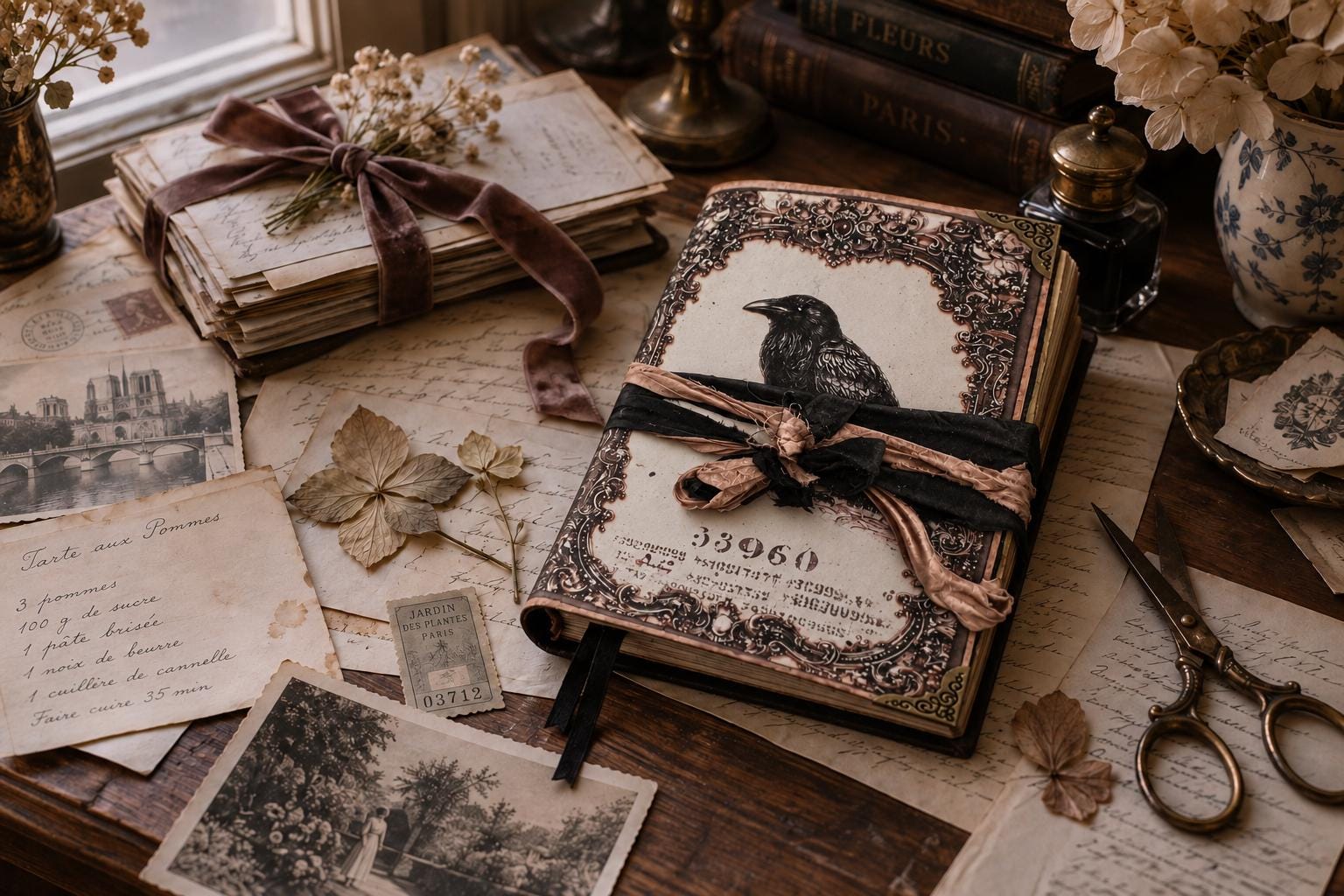
There are some things we keep for reasons we can’t always explain. A faded photograph tucked inside a book. A handwritten recipe in someone else’s familiar script. A postcard from a place we visited years ago. A theater ticket, a pressed flower, a Christmas tag with a name written across the front. None of these things may be especially valuable on their own. And yet, somehow, they become priceless to us. Perhaps that is because the things we save are rarely just things. They are little pieces of our lives.
The Things We Almost Throw Away
So much of what eventually becomes meaningful starts out as something ordinary: a receipt from a favorite restaurant, a note slipped into a lunch bag, the program from a school play, a ribbon from a beautifully wrapped gift, a recipe card stained from years of use, or a postcard picked up on vacation. At the time, we may barely think twice about them. Years later, one small piece of paper can return us to a moment we had almost forgotten. Suddenly we remember who was there, what the room looked like, what someone said, or how we felt. Memory has a funny way of attaching itself to ordinary things.
Why Paper Feels Different
We live in a world where so much of our lives now exist digitally. Photographs live on phones. Conversations happen through text messages. Invitations arrive by email. Recipes are bookmarked rather than written on cards. Digital life is wonderfully convenient, but there is something different about holding an object that has traveled through time with us. A handwritten letter carries more than words. It carries the pressure of someone’s pen and the shape of their handwriting. An old photograph may have a bent corner or a date written across the back. A recipe might include a correction in the margin, a splash of vanilla, or a note that says, “Bake a little longer than it says.” Those imperfections become part of the story. They remind us that another person once held that piece of paper too.
We Used to Keep More
There was a time when memory keeping happened almost without thinking about it. Photographs were placed in albums. Recipes were written by hand and passed from one kitchen to another. Letters were tied together with ribbon or tucked into drawers. Postcards traveled home from vacations. Scrapbooks held announcements, clippings, cards, and photographs. Families kept boxes filled with bits and pieces of their lives. Not everything was carefully organized or beautifully preserved. Sometimes the most interesting treasures were found completely by accident—in an old book, an attic box, or the back of a drawer. But those little things survived. And because they did, a story survived with them.
What Makes Something Worth Keeping?
It is easy to assume that the things worth preserving are the important things: wedding photographs, birth announcements, diplomas, and milestone birthdays. Of course those matter. But sometimes ordinary things tell us even more. A grocery list written in our grandmother’s handwriting. A child’s drawing of the family. The postcard our parents sent before we were born. The recipe everyone requested at Christmas. A train ticket from a trip that changed something in us. The note that simply says, “Thinking of you.” These aren’t necessarily the things anyone else would choose to save. That may be exactly why they are so meaningful. They belong to our story.
Give the Little Things a Place
One reason these treasures disappear is surprisingly simple: we don’t know where to put them. They end up tucked into drawers, slipped between book pages, or placed in boxes we promise ourselves we’ll sort through someday. Creating a dedicated place for these pieces can transform them from clutter into a collection.
A journal, memory book, or ephemera folio doesn’t have to be perfectly arranged. It doesn’t even have to be finished. It can simply become a home for the things you want to remember. A photograph can share a page with a handwritten sentence. A recipe can sit beside a photograph of the person who made it. A postcard can be tucked inside a pocket. A ribbon, ticket, or letter can remain exactly as it is. There are no rules. '
At The French Heart, I love the idea of an ephemera folio as a little cabinet of memories made from paper—pockets, pages, and folds waiting to hold photographs, letters, recipes, postcards, and all the fragments of a life that might otherwise be lost. It can be filled completely, slowly, or simply enjoyed as a beautiful paper object in its own right.
You Don’t Have to Save Everything
Memory keeping does not mean keeping every receipt or every scrap of paper that crosses your path. The real question is much simpler: Does this little thing take me somewhere? Does it make you remember a person? A place? A season of your life? A moment you would like to find again someday? If the answer is yes, perhaps it deserves a place.
The Stories Hidden in Our Drawers
Somewhere in almost every home there is probably a drawer, box, or envelope filled with little things someone couldn’t quite bring themselves to throw away. Those collections may not look important. But open one, and an entire life can appear. A face. A voice. A Christmas morning. A trip taken decades ago. A recipe made a hundred times. A love letter. A child’s handwriting. A place that no longer exists. Perhaps that is why we keep these things. Not because the paper itself matters. Because the story does. And sometimes the smallest scrap of paper can hold an entire memory.
Begin Your Own Little Cabinet of Memories
If you have a drawer full of photographs, letters, recipes, postcards, ribbons, tickets, or tiny paper fragments you can’t quite let go of, perhaps this is your invitation to begin gathering them in one place. Let them become a story you can hold, revisit, and someday pass along.
At The French Heart, each ephemera folio is created with that spirit in mind: a beautiful home for the keepsakes that matter quietly, deeply, and personally. Whether you fill yours with family memories, travel treasures, holiday mementos, or simply the paper pieces that make your heart pause, it can become a keepsake in its own right. Explore the latest ephemera folios and paper treasures from The French Heart and begin preserving the little pieces of your story today.